

Radishes are Rad
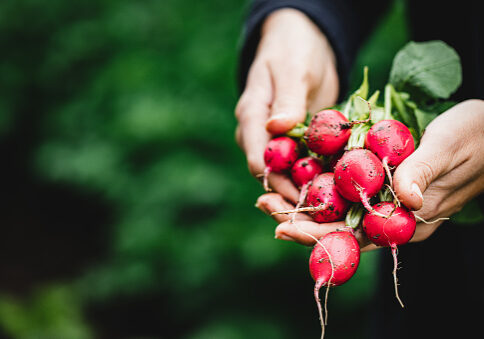
Radish and Radish leaves support digestion
Radishes and radish leaves are high in a fiber called soluble fiber. When consumed, soluble fiber moves slowly through the digestive system, absorbing water and forming a gel-like substance that can help create formed stools and improve consistency. Soluble fiber along with adequate fluid and physical activity can help relieve diarrhea, IBS symptoms, bloating, as well as conditions such as high cholesterol. This slow digestion of soluble fiber also slows absorption of sugar into the blood and can help with blood sugar balance. Fiber also helps feed beneficial bacteria in the gut; when gut bacteria break down fiber, they produce essential short-chain fatty acids, an important source of energy for a healthy gut.
Radishes have compounds that may have anticancer properties.
Radishes contain compounds that may have anticancer properties. One of these compounds is an isothiocyanate known as sulforaphane. Sulforaphane, found in cruciferous vegetables, has been studied for its health promoting properties, specifically its role in chemoprevention. Sulforaphane has the capacity to be selectively toxic to malignant cells. It does so through a variety of mechanisms, including inhibition of enzymes involved in carcinogenesis as well as initiation of cell death in cancer cells.
The formation of isothiocyanates, however, occurs through a series of steps that are dependent on several factors. This can include gut pH, temperature, or the presence of iron. An enzyme caed myrosinase present in daikon radish and mustard seeds is particularly effective at driving formation of isothiocyanates. Daikon radishes and mustard seeds can therefore be added to other foods high in sulforaphane, such as broccoli, to further enhance sulforaphane formation.
Additionally, chewing, chopping, or freezing foods high in sulforaphane can trigger an enzymatic reaction that produces sulforaphane. It can therefore be helpful to “Chop And Stop,” pausing before cooking, when cutting up radishes or other foods high in sulforaphane such as broccoli sprouts, brussels sprouts, or cauliflower.
Antioxidants and vitamins in radishes
Radishes are rich in vitamin C, an antioxidant that supports immune function. Vitamin C fights free radicals, unstable molecules that have lost an electron and can cause damage in the body. Antioxidants such as vitamin C can donate an electron to free radicals, causing them to stabilize, thereby preventing or repairing damage. Vitamin C is essential for growth and repair of tissues in the body, helps heal wounds, and repairs and maintains healthy bones, teeth, skin, and cartilage. Red radishes also contain anthocyanin, a flavonoid with antioxidant, anti inflammatory, and chemoprotective properties.
Sources:
https://www.ncbi.nlm.nih.gov/pmc/articles/PMC6412475/
https://www.ncbi.nlm.nih.gov/pmc/articles/PMC5842175/
https://www.ncbi.nlm.nih.gov/pmc/articles/PMC4432495/
https://pubmed.ncbi.nlm.nih.gov/20944112/