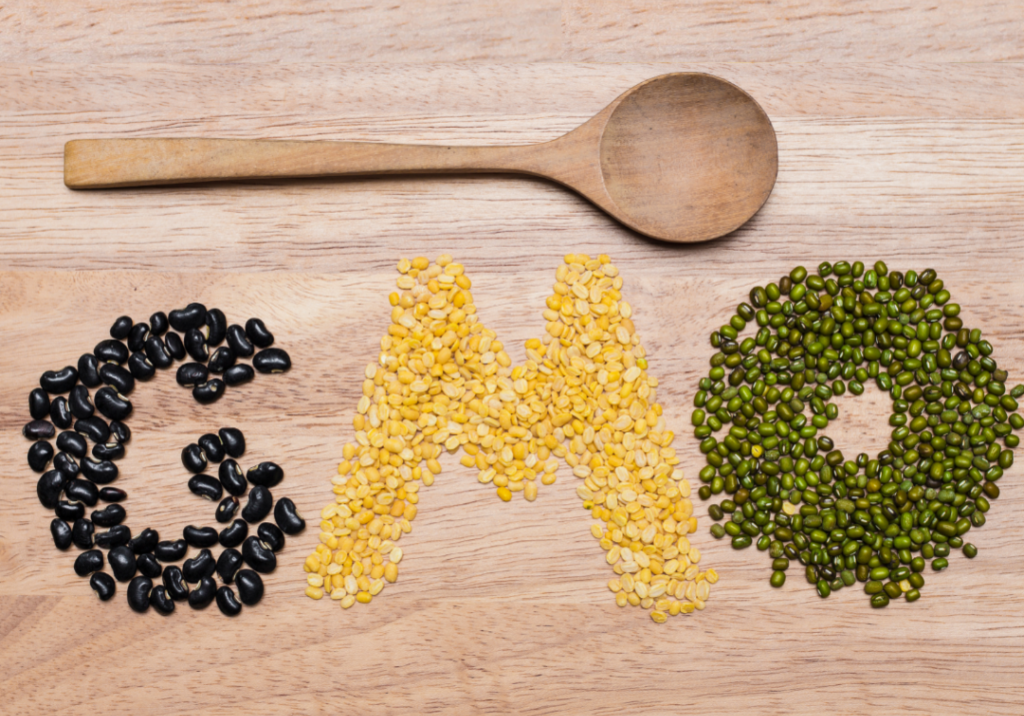
You might have noticed the letters GMO on your food labels, or a statement noting the item is made without GMO ingredients. What do we need to know about GMO foods?
GMOs, or Genetically Modified Organisms, are organisms whose genetic material has been altered via genetic engineering techniques. This is usually done to provide the organism with a certain desirable trait such as resistance to pesticides, herbicides, frost, insects, or to improve yield, shelf life, or nutritional value.
Not all foods are genetically modified. However, many GMO crops are used to make ingredients such as cornstarch, corn syrup, corn oil, soybean oil, canola oil, and granulated sugar that can be found in various processed foods.
You cannot tell if a food is a GMO by looking at it. If one is interested in avoiding GMOs, look for labels such as the USDA Organic Certification or the Non-GMO Project Verified seal. In 2018, the National Bioengineered Food Disclosure Law directed the USDA to establish a mandatory standard for disclosing foods that are bioengineered. Mandatory compliance, in which food labels will have to disclose information about bioengineered ingredients, will occur in 2022.
Some of the most common GMO foods are corn, soybeans, canola oil, sugar beets, and alfalfa.
While it is generally safe to consume GMOs, their use can result in environmental harm, which in turn can be damaging to human health. Fields of crops genetically modified to withstand herbicides are often sprayed with harmful chemicals such as glyphosate which have been associated with an increased risk of disease. Herbicides can also spread into non-GMO crop fields, creating a harmful cycle.
Furthermore, genetic diversity lies at the heart of a species’ ability to propagate. In creating genetically uniform crops, we obstruct this process, making our seed banks highly vulnerable.