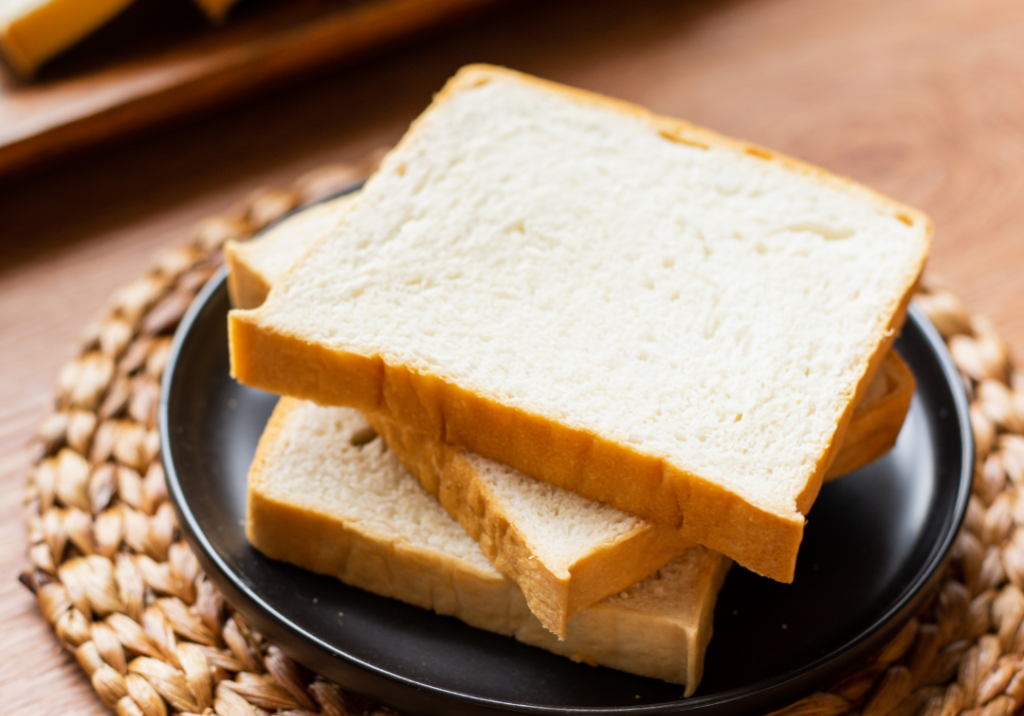
Bread always seems to get a bad rap. Do we really need to avoid bread in all forms, or is there a place for it in a balanced diet?
One of the most common side effects of eating bread is that it can lead to a spike in blood sugar. This spike is often followed by a crash, which can lead to cravings and fatigue.
This is especially true when consuming white bread made from refined grains. Refined grains are grains that are stripped of their fibrous shell as well as many nutrients. Without this fiber, refined grains are quickly and easily broken down into glucose in the body, which can lead to a spike in blood sugar.
While refined bread can lead to a spike in blood sugar, toasted or stale bread (think croutons in soups or salads or crostini with spreads) will have less of a dramatic impact on blood sugar.
Toasted or stale bread develops higher levels of resistant starch, a type of starch that, as its name suggests, resists digestion in the small intestine. Resistant starch develops in stale bread, as well as in bread that is heated and allowed to cool. Resistant starch has various health benefits including improving insulin sensitivity, lowering blood sugar levels after meals, and feeding beneficial gut bacteria. Whole grain bread, whose fiber and nutrients are intact, is also a better option than refined white bread as it will have less of an effect on blood sugar levels.
Better yet, opt for toasted or stale whole-grain bread to reap the greatest benefits!
https://onlinelibrary.wiley.com/doi/full/10.1111/j.1467-3010.2005.00481.x
https://www.ncbi.nlm.nih.gov/pmc/articles/PMC5320660/
https://pubmed.ncbi.nlm.nih.gov/16600933/