

Makeover your Morning Oats for Optimal Metabolism
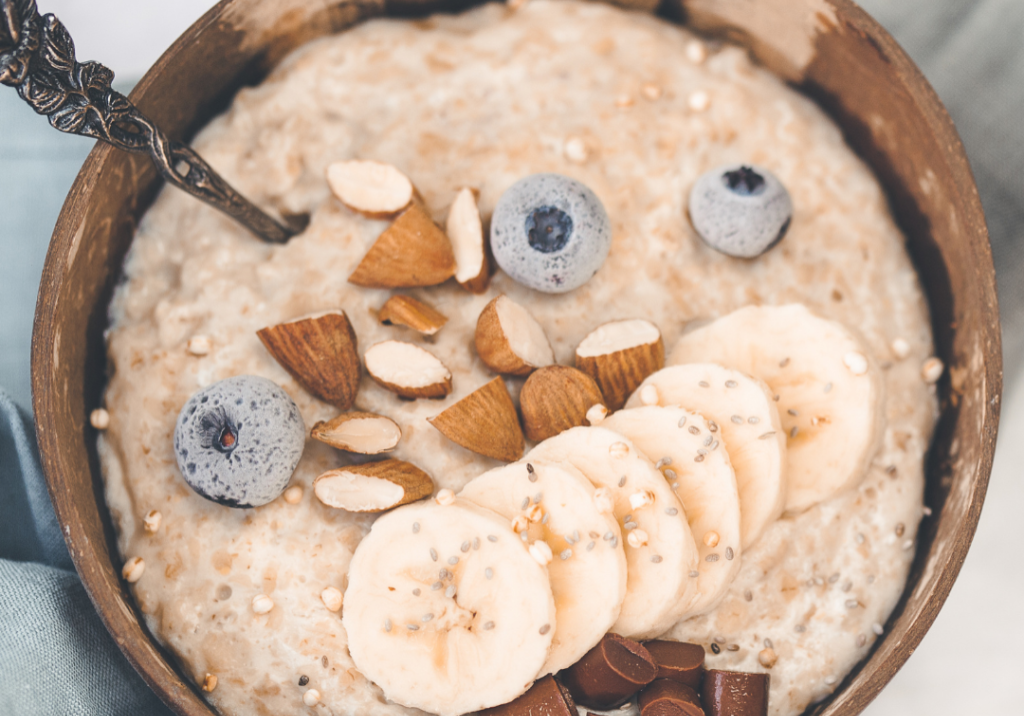
Our social media feed is often filled with beautiful, colorful “wellness bowls.” These bowls often contain some combination of oatmeal, sliced bananas, a honey drizzle, and a pool of almond or peanut butter. While these morning bowls certainly look delicious and comforting, this combination of carbohydrates and fat may not be the best option for weight management.
Studies show that when carbohydrates are paired with fat, this hyper-palatable combination can result in eating beyond our needs. Think about it: What is more appealing, bread, cheese, or bread and cheese together? This combination of carbohydrates and fats lights up pleasure centers in our brain, which can increase our appetite and cause us to overeat.
A carbohydrate-heavy meal will also result in a spike in the hormone insulin. After eating, insulin brings glucose, the sugar from food, into our cells which supply us with energy. However, insulin also upregulates fat storage by priming fat cells to store excess glucose as fat. Fat on its own therefore will not contribute to excess fat storage in the same way it will when fat is paired with carbohydrates.
Rather than fat, consider protein as the soul mate for your carbohydrates. Protein takes longer to digest than carbohydrates, so eating the two together will slow digestion and absorption in the intestines. This in turn slows the rate of sugar entering the bloodstream, preventing a blood sugar spike and crash which can occur when carbohydrates are eaten on their own. One study found adding protein to a meal with carbohydrates reduced the glycemic index of the carbohydrate or the speed at which carbohydrates are broken down, three times more than fat did. Pairing carbohydrates with protein also increases satiety, leading to overall decreased intake.
Next time you’re preparing a morning bowl of oats, consider setting yourself up for success by building a balanced bowl, such as our PrOatmeal recipe. By using rolled or steel-cut oats, and adding in seeds, protein, and fiber, you will be getting a balance of carbohydrates and protein. If you want to change it up, consider this delicious Key3 Smoothie, which will provide you with a combination of protein, fat, and fiber that will keep you satisfied and energized all day long.
References:
https://pubmed.ncbi.nlm.nih.gov/29909968/
https://pubmed.ncbi.nlm.nih.gov/16988118/
Research:
Pairing Carbs With Fat vs. Protein
Pairing Carbs with Protein
- Ideal to pair carbs with protein
- After consuming carbohydrates, bodies release insulin into the bloodstream. Protein (and fat) take longer to digest than carbs, so eating protein with carbs slows digestion and absorption in the intestines, thereby slowing the rate of sugar entering the bloodstream
- Pairing carbs and protein increases satiety, leading to overall decreases intake
- Study found adding protein to a meal reduced the glycemic index of a carbohydrate (had 3x effect of fat), slowing the speed at which carbs were broken down
- Post-exercise: both carb and protein, as carbs replenish glycogen stores while protein repairs damaged muscle. Consuming protein alone may cause some to be broken down for glycogen replacement.
Pairing Carbs with Fat
- While fat takes longer to digest and so may help with blood sugar balance when eating with carbs, it may also contribute to weight gain
- Fat and insulin – Insulin upregulates fat storage, takes excess glucose, and stores it as fat. Dietary fat has minimal effect on postprandial insulin levels but can result in reduced insulin sensitivity which can impact long term glucose management (this is for high-fat diet, not specifically consuming fat and carbs together)
- Combining carbs and fat may make foods more rewarding, resulting in overeating
- https://www.nbcnews.com/health/health-news/combining-fat-carbs-overloads-brain-makes-us-overeat-n883201
General Takeaways
- Seems pairing carb with protein is best, as this enhances satiety, results in slower digestion, helps balance blood sugar
- While fat slows digestion, fat, and carb together can result in overeating, plus excess fat is stored