

Will fruit make me fat?
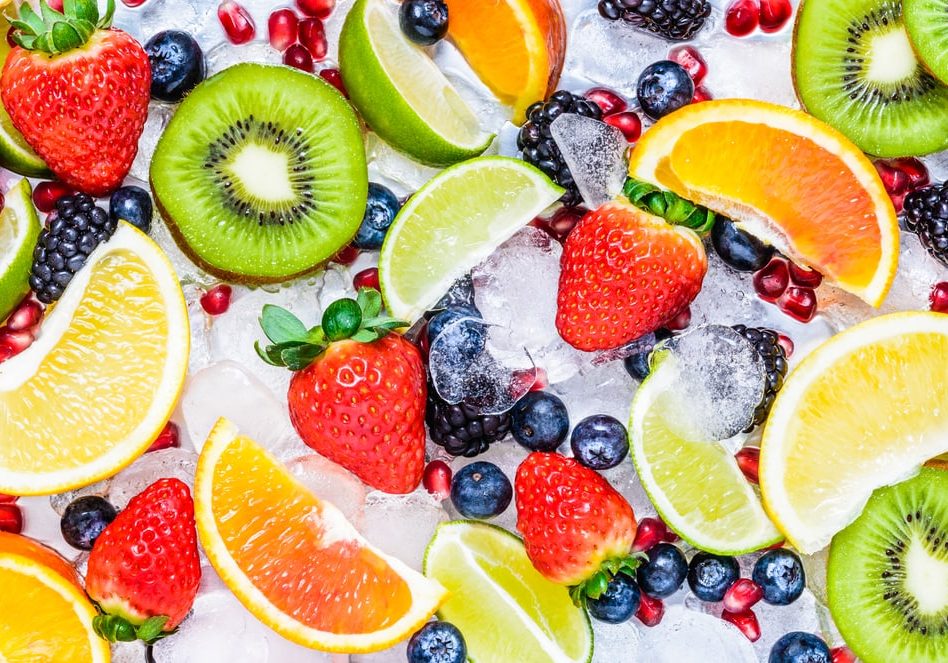
We all know fruit is healthy for us – but did you know that too much fruit could hinder your weight loss goals? Many fruits are high in fructose, a type of sugar that gets processed in our bodies differently than glucose. Glucose is the type of sugar that is in our blood, raises our blood sugar after we eat, and triggers the release of insulin. While fructose is also a sugar, it doesn’t raise our blood sugar OR trigger insulin! That may sound like a good thing, but let me explain.
Fructose – found in fruits, sugar-sweetened packaged products, and sugary drinks – gets absorbed in our intestine and transported straight to the liver. There, it gets converted and stored as fat. So, unlike glucose, it doesn’t get used for immediate energy needs. Because of this, it doesn’t release signals to your body that it has just eaten – this hinders your fullness cues. Can you think of the last time you drank a glass of lemonade and felt stuffed after?
We’re not saying that fruit will make you fat – but too much fructose will get stored as fat and saved for later, and it will not fill you up, leading you to eat more than you intended to. Choosing lower fructose options to eat as snacks may be better for weight loss.
WHICH FOODS ARE HIGHEST IN FRUCTOSE?
Dried fruits and syrups will typically have higher fructose content because they are more concentrated sources. Additionally, these sources are stripped of their healthy fiber content, and we recommend eating fruit in its whole form to get other benefits such as fiber and minerals!
Here are some of the highest sources of fructose:
- Agave nectar
- Honey
- High fructose corn syrup (check food labels)
- Raisins
- Dates
- Dried apples
- Dried figs
- Jam, all types
- Grapes
- Cherries
- Apples
IF AGAVE NECTAR AND HONEY ARE TWO CONCENTRATED SOURCES OF FRUCTOSE, WHY ARE THEY ALWAYS USED AS SUGAR ALTERNATIVES?
A lot of this has to do with great marketing. Agave nectar and honey are typically less processed than table sugar, but in terms of the way they are processed in the body, they are not superior. They get converted to fat much quicker than normal glucose does. Again – it’s okay to put a teaspoon of honey in your tea, but don’t go overboard.
WHAT ARE SOME OTHER THINGS YOU CAN DO TO MINIMIZE THE FAT-STORING EFFECTS OF FRUCTOSE?
- Don’t pair alcohol with fructose: just as fructose gets metabolized in the liver, so does alcohol! It also gets stored as fat, and this may overwhelm the liver. So if you’re on a night out, opt for a piece of dark chocolate after dinner, instead of a fruit platter.
- If you’re choosing fruit – eat the fiber that comes with it! Skip the orange juice for a whole orange.
- When eating fruit, opt for half the portion size and add a protein and healthy fat. Think half a banana with almond butter instead of a whole banana by itself.